Cart
0
You may also like this


How to Choose the Right Serum for Acne-Prone Skin
Choosing skincare can become confusing when your skin is prone to breakouts. There are serums for oil control, clogged pores, dark spots, hydration and brightening, and many products claim to be suitable for acne-prone skin.
But having more choices doesn't necessarily make the decision easier.
The right serum should match your skin's needs rather than simply promising clearer-looking skin. Before buying an acne serum, it is important to understand your skin type, identify the concerns you want to address and look at the ingredients in the formula.
If you're trying to find the best serum for acne, this guide will help you understand what to look for, how to use a serum properly and which common mistakes to avoid.
What Does Acne-Prone Skin Mean?
Acne-prone skin is skin that tends to develop breakouts more frequently. These may include blackheads, whiteheads, pimples or other forms of acne.
Acne can develop when hair follicles become clogged with oil and dead skin cells. Hormonal changes, inflammation, bacteria and other factors can also contribute to breakouts.
Some people naturally produce more oil, while others may notice that their skin becomes more prone to breakouts during certain periods of the year or in response to particular products.
Understanding your skin is the first step toward choosing the right serum for acne-prone skin.
Why Does Choosing the Right Serum Matter?
A serum is not automatically suitable for acne-prone skin simply because it is labelled "acne serum."
Different products are formulated for different concerns.
For example, one serum may focus mainly on clogged pores, another may target excess oil, while another may be designed to improve the appearance of dark marks left after breakouts.
Using a product that doesn't match your skin's needs may provide little benefit or may leave your skin feeling dry and irritated.
The goal should be to choose a formula that complements your overall skincare routine.
Know Your Skin Before Choosing a Serum
Before purchasing an anti acne serum, take a moment to understand your skin.
Oily Skin
If your face tends to become shiny quickly, particularly around the forehead, nose and chin, you may have oily skin.
People with oily and acne-prone skin often look for lightweight formulations that don't leave the skin feeling excessively greasy.
Combination Skin
Combination skin can be oily in some areas and relatively normal or dry in others.
If this sounds familiar, you may need a balanced routine rather than treating your entire face as if it has the same needs.
Dry or Sensitive Skin
Acne-prone skin isn't always oily.
Some people experience breakouts while also dealing with dryness or sensitivity. In this case, using too many strong active ingredients can make the skin uncomfortable.
A gentle routine that supports the skin barrier can be particularly important.
Which Ingredients Should You Look for?
Once you understand your skin, the next step is to look at the ingredients.
A good serum for acne should contain ingredients that have a clear purpose for the concerns you're trying to manage.
Salicylic Acid
Salicylic acid is one of the most commonly used ingredients in acne-focused skincare.
It helps exfoliate the skin and can penetrate into pores, which is why it is commonly used for concerns such as blackheads, whiteheads and clogged pores.
The American Academy of Dermatology includes salicylic acid among topical options used in acne management.
If clogged pores and excess oil are major concerns, a formulation containing salicylic acid may be worth considering.
Azelaic Acid
Azelaic acid is another ingredient commonly used in acne skincare.
It can help address acne-related concerns and may also help improve the appearance of dark spots that remain after breakouts.
This makes it useful for people who are concerned about both active acne and the marks that can remain afterward.
Niacinamide
Niacinamide is widely used in skincare products designed for oily and blemish-prone skin.
It can support the skin barrier and is often included in formulations intended to help maintain a balanced-looking complexion.
Zinc PCA
Zinc PCA is commonly included in formulations designed for oily or acne-prone skin.
It is often used in products aimed at helping manage the appearance of excess oil.
The important thing is not to choose an ingredient simply because it is popular. Consider how the complete formula fits your skin and your existing routine.
Should You Choose a Serum for Acne or Acne Marks?
This depends on your main concern.
If you're currently experiencing frequent breakouts, you may want to prioritize ingredients commonly used for acne-prone skin.
If your main concern is the dark marks left behind after breakouts, you may be more interested in a formulation that addresses uneven-looking skin and post-acne discoloration.
Some ingredients can be relevant to both concerns.
For example, azelaic acid is used in acne management and can also help with the appearance of dark spots following acne.
This is why people sometimes search specifically for an acne marks serum.
However, acne marks and acne scars are not the same thing.
A flat dark spot left after a pimple is different from a depressed or raised scar. Persistent or significant scarring may require professional dermatological treatment.
What Makes the Best Serum for Acne?
When searching online for the best serum for acne, it's easy to compare products based only on reviews, popularity or price.
A better way to compare them is to look at several factors.
1. The Ingredients
Check which active ingredients are included and understand what they are intended to do.
2. Your Skin Type
A serum that works well for oily skin may not feel comfortable on dry or sensitive skin.
3. Your Main Concern
Are you dealing mainly with clogged pores, excess oil, active breakouts or post-acne marks?
Your answer should influence your choice.
4. The Rest of Your Routine
Think about the cleanser, moisturizer and other active products you're already using.
Adding another strong product may not always be necessary.
5. Your Skin's Tolerance
Everyone's skin responds differently.
If a product causes significant dryness or irritation, reassess how you're using it and consider professional advice if needed.
How to Use a Serum for Acne-Prone Skin
Once you've chosen an appropriate serum for acne, using it correctly is just as important.
A simple routine is usually easier to maintain than a complicated one.
Morning
Cleanser: Gently cleanse your face.
Serum: Apply your serum according to its instructions.
Moisturizer: Use a moisturizer suitable for your skin type.
Sunscreen: Apply broad-spectrum sunscreen during the day.
Evening
Cleanser: Remove dirt, oil and other buildup from your skin.
Serum: Apply your acne-focused serum according to the product directions.
Moisturizer: Finish with a suitable moisturizer if needed.
If you're introducing an active serum for the first time, follow the product's recommended frequency rather than immediately increasing use.
How Often Should You Apply Acne Serum?
There isn't one frequency that works for every serum.
The recommended use depends on the ingredients and formulation.
Always follow the directions provided with the product.
If you're new to active skincare, introducing the product gradually can help you understand how your skin responds.
Using more product than recommended will not necessarily produce faster results.
In fact, excessive use of active ingredients can leave the skin dry or irritated.
Don't Forget Moisturizer
People with acne-prone skin sometimes avoid moisturizer because they believe adding moisture will make their skin more oily.
That's not necessarily the case.
Acne-prone skin can still become dry, especially when using active ingredients.
A suitable moisturizer can help maintain the skin barrier and make your routine more comfortable.
Look for a moisturizer that feels appropriate for your skin type and doesn't leave you feeling excessively greasy.
Sunscreen Is Part of Acne Skincare
If you're concerned about acne marks, sunscreen deserves a place in your daily routine.
UV exposure can contribute to changes in pigmentation and can make existing dark spots more noticeable.
The American Academy of Dermatology recommends using a broad-spectrum sunscreen with SPF 30 or higher.
This is particularly important when your skincare routine includes active ingredients.
Common Mistakes When Choosing an Acne Serum
Choosing the right product is only half the process. How you use it matters too.
Buying a Product Because It Is Trending
Popularity doesn't necessarily mean a product is right for your skin.
Look at the ingredients and formulation instead.
Using Too Many Active Ingredients
Adding several strong products to your routine at the same time can increase the risk of irritation.
Introduce new products carefully.
Applying Too Much Serum
A larger amount doesn't mean better results.
Follow the recommended amount on the product instructions.
Scrubbing Your Face
Acne isn't something that can simply be scrubbed away.
Aggressive scrubbing can irritate the skin and may make breakouts appear worse.
Picking or Squeezing Pimples
It may be tempting, but picking at breakouts can increase inflammation and contribute to marks or scarring.
Expecting Overnight Results
Skincare requires consistency.
Acne treatments generally need time before noticeable improvement occurs. The American Academy of Dermatology notes that it can take around 6 to 8 weeks to start seeing fewer breakouts with acne treatment.
Can One Serum Solve Every Skin Concern?
Probably not.
It's tempting to look for one product that will clear acne, remove marks, control oil, brighten the skin and completely transform your complexion.
Real skincare is usually less dramatic.
Different concerns may require different ingredients and approaches.
Your serum should have a specific role in your routine rather than trying to do everything at once.
A simple routine with products that complement each other is often easier to maintain.
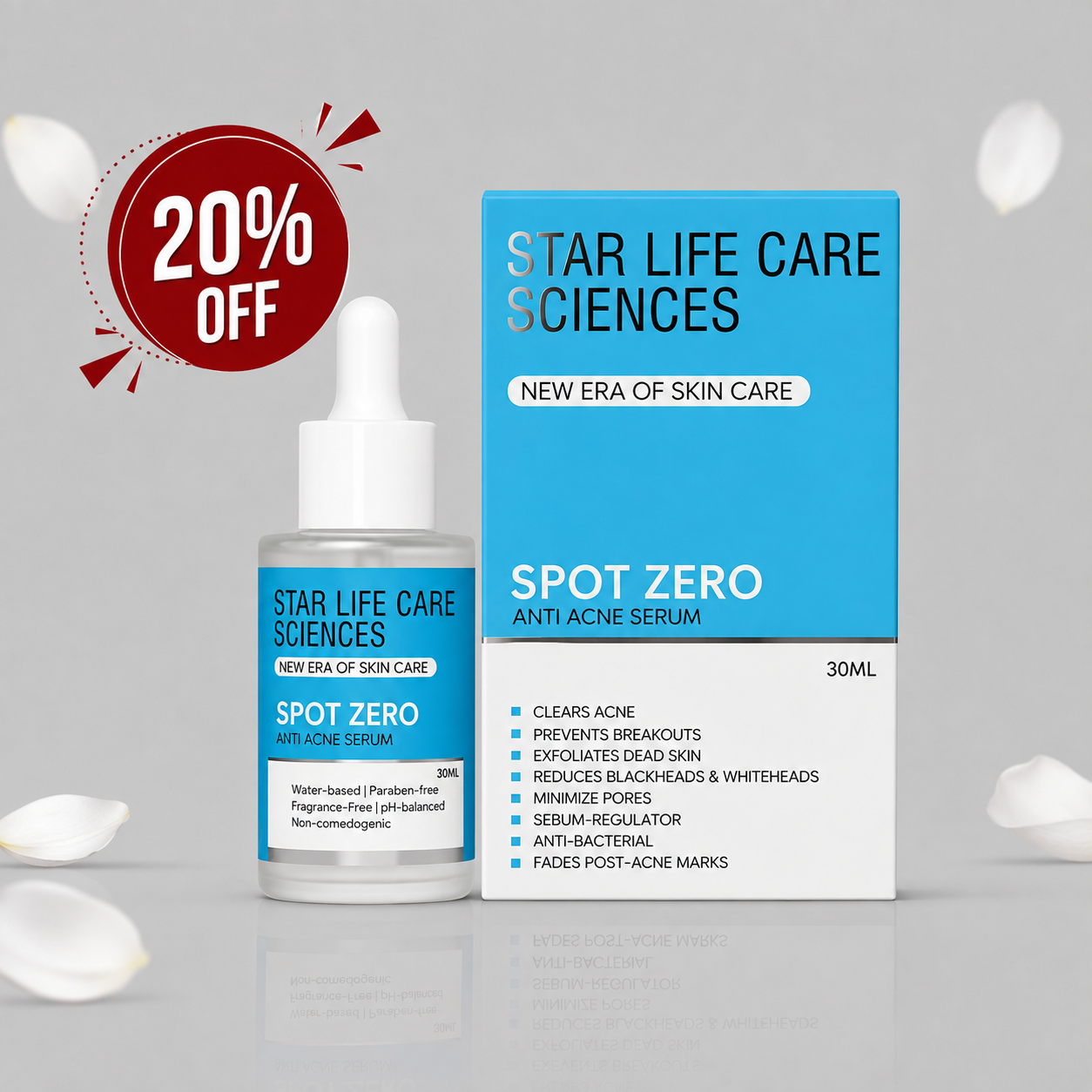
SPOT Zero Anti Acne Serum by Star Life Care Sciences
For those looking for an acne serum in Pakistan, Star Life Care Sciences offers SPOT Zero Anti Acne Serum as part of its acne-focused skincare range.
SPOT Zero contains:
These ingredients are selected to address common concerns associated with acne-prone skin, including excess oil, clogged pores, blackheads, whiteheads and breakouts.
The combination also makes SPOT Zero relevant to people looking for an anti acne serum or a serum for acne.
For customers comparing acne serum price in Pakistan, the latest product price and availability can be checked directly through the Star Life Care Sciences website.
How to Choose an Acne Serum in Pakistan
If you're searching for an acne serum in Pakistan, there are a few additional things worth considering before making a purchase.
Check the Product Information
Read the ingredient list, directions and other information provided by the brand.
Buy From a Reliable Source
Purchase from the official brand website or an authorized seller whenever possible.
Consider Your Skin Type
Pakistan's climate can vary significantly throughout the year, and your skin may behave differently depending on the weather.
A lightweight formula may feel more comfortable during hot weather, while a supportive moisturizer may be more important during drier periods.
Don't Choose Based on Price Alone
When comparing acne serum price in Pakistan, consider the formulation, ingredients, product size and suitability for your skin rather than simply choosing the cheapest product.
When Should You See a Dermatologist?
An over-the-counter acne treatment may be appropriate for some people with mild acne, but skincare products aren't suitable for every situation.
Consider seeing a dermatologist if you experience:
A dermatologist can assess your skin and recommend treatment based on the type and severity of your acne.
Frequently Asked Questions
What is the best serum for acne-prone skin?
The best serum for acne depends on your skin type, the kind of acne you experience and the ingredients in the formulation. There isn't one product that works best for everyone.
Can I use an acne serum every day?
It depends on the product and its active ingredients. Follow the manufacturer's directions and pay attention to how your skin responds.
Can acne serum help with dark spots?
Some acne-focused ingredients can also help improve the appearance of post-acne dark spots. Azelaic acid is one example.
Should I use moisturizer with an acne serum?
Yes. Acne-prone skin can still become dry, especially when using active ingredients. A suitable moisturizer can help support the skin barrier.
Do I need sunscreen when using acne serum?
Daily sunscreen is recommended as part of a complete skincare routine. It is particularly useful when you're concerned about pigmentation and post-acne marks.
How long does acne serum take to work?
Results vary. Acne treatment generally requires consistent use over several weeks. Around 6 to 8 weeks may be needed before you begin to notice fewer breakouts.
Where can I buy acne serum in Pakistan?
If you're looking for an acne serum in Pakistan, purchase from a reputable brand or authorized seller. Star Life Care Sciences offers SPOT Zero Anti Acne Serum through its official website.
Final Thoughts
Choosing the right serum for acne-prone skin doesn't have to be complicated.
Start by understanding your skin type and identifying your main concern. Then look at the ingredients, consider how the product fits into your existing routine and introduce active products carefully.
If your concerns include clogged pores, excess oil, breakouts or post-acne marks, an appropriately formulated acne serum can become a useful part of your skincare routine.
For people searching for an anti acne serum, serum for acne or acne marks serum, SPOT Zero Anti Acne Serum from Star Life Care Sciences contains salicylic acid, azelaic acid, niacinamide and Zinc PCA.
Most importantly, give your routine time. Good skincare isn't about using the most products. It's about using the right products consistently and understanding what your skin needs.

