Cart
0
You may also like this


Niacinamide for Acne-Prone Skin: Benefits, Uses, and How to Choose the Right Serum
Acne-prone skin needs more than just a product that targets breakouts. If your skin is oily, sensitive, or easily irritated, choosing the right ingredients can make a noticeable difference in how your skincare routine feels and performs.
One ingredient that has become a popular choice in modern niacinamide skincare is niacinamide, a form of vitamin B3. It is widely used in serums and other skincare products because of its ability to support the skin barrier, help manage excess oil, and improve the appearance of uneven skin tone.
But is niacinamide good for acne-prone skin? And what should you look for when choosing a serum?
Let's take a closer look at niacinamide for acne-prone skin, its benefits, how to use it, and how to choose a product that fits your skincare needs.
What Is Niacinamide?
Niacinamide, also known as nicotinamide, is a form of vitamin B3 used in a wide range of skincare products.
It is valued for its versatility and is commonly included in products formulated for oily, combination, acne-prone, and uneven-looking skin.
Unlike an ingredient designed to address only one concern, niacinamide can be included in a routine that focuses on several skin concerns at the same time.
This is one reason niacinamide serum has become such a popular skincare choice.
Is Niacinamide Good for Acne-Prone Skin?
Yes, niacinamide for acne-prone skin can be a useful addition to a well-balanced skincare routine.
Research has investigated topical niacinamide for acne, oil production, skin barrier function, and pigmentation. It may be particularly useful for people whose skin concerns include excess oil, occasional breakouts, and an uneven-looking complexion.
However, it is important to understand that niacinamide is not a guaranteed cure for acne.
Acne can range from occasional spots to persistent, painful, or severe breakouts. In more serious cases, professional treatment from a dermatologist may be necessary.
What Does Niacinamide Do for Acne-Prone Skin?
If you're wondering what does niacinamide do for acne-prone skin, the answer involves several different aspects of skin health.
Helps Manage Excess Oil
Excess oil can make the skin look shiny and may contribute to clogged pores.
Research has found that topical niacinamide may help reduce certain measures of sebum production. This makes niacinamide for oily skin an interesting option for people who struggle with an oily complexion.
A lightweight niacinamide serum for acne can therefore fit well into a routine designed for oily and acne-prone skin.
Supports the Skin Barrier
The skin barrier helps protect your skin from external factors and helps maintain moisture.
Niacinamide is commonly used in skincare formulations designed to support the skin barrier. This can be especially relevant if your skincare routine contains exfoliating or acne-focused ingredients that may leave your skin feeling dry.
Good skincare is not only about managing breakouts. It is also about keeping the skin comfortable and balanced.
Helps Improve the Appearance of Uneven Skin Tone
Acne can sometimes leave visible marks after a breakout has healed.
Niacinamide is widely used in products designed to improve the appearance of uneven skin tone, which is why niacinamide for acne marks is another popular search among skincare users.
It should not be considered a quick solution for every type of pigmentation, but it can be a useful part of a consistent skincare routine.
Niacinamide for Breakouts and Clogged Pores
If you regularly experience breakouts, you may also be dealing with excess oil and clogged pores.
While niacinamide itself is not an exfoliating acne treatment, it can complement a routine containing ingredients specifically selected for clogged pores and breakouts.
For people concerned about niacinamide for breakouts, choosing a formula that combines niacinamide with other acne-focused ingredients can be worth considering.
What Are the Main Niacinamide Benefits for Skin?
The popularity of niacinamide comes from its versatility.
Some of the commonly discussed niacinamide benefits for skin include:
The results of any skincare ingredient can vary from person to person, so consistency and choosing the right formulation are important.
Niacinamide for Sensitive Skin
People with sensitive skin often need to be more careful when introducing new active ingredients.
Although niacinamide is generally considered a well-tolerated skincare ingredient, every person's skin is different.
If you are looking for niacinamide for sensitive skin, start with a simple routine and introduce new products gradually. Avoid introducing several strong active ingredients at the same time.
If a product causes persistent burning, redness, swelling, or significant irritation, stop using it and seek professional advice if needed.
Can Niacinamide Help With Acne?
So, can niacinamide help with acne?
It may help support an acne-focused skincare routine, particularly when excess oil and skin barrier concerns are involved. However, niacinamide should not replace proven medical acne treatments when those treatments are necessary.
For mild acne concerns, a carefully selected skincare routine may include ingredients such as niacinamide alongside other acne-focused ingredients.
For persistent or severe acne, a dermatologist can help determine the most appropriate treatment.
Can Niacinamide Reduce Acne?
A common question is can niacinamide reduce acne?
Niacinamide has been studied for its potential role in acne skincare, particularly because of its anti-inflammatory and sebum-regulating properties.
However, the response can vary between individuals. Rather than expecting one ingredient to eliminate acne completely, it is better to think of niacinamide as one component of a broader skincare routine.
Niacinamide and Salicylic Acid
Salicylic acid is a well-known ingredient in acne skincare because it helps exfoliate the skin and is commonly used for clogged pores.
So, can niacinamide be used with salicylic acid?
Yes. The two ingredients can be included in the same skincare routine, and they are also combined in some acne-focused formulations.
Niacinamide and salicylic acid serve different purposes, which can make the combination useful for people dealing with oily and acne-prone skin.
However, if your skin is sensitive, introduce active ingredients gradually and monitor how your skin responds.
Niacinamide and Azelaic Acid
Azelaic acid is another ingredient commonly used in skincare routines focused on acne and uneven-looking skin.
Combining niacinamide with azelaic acid can be useful when a formula is designed to address multiple concerns, such as breakouts and the appearance of post-acne marks.
Again, the overall formulation matters more than simply counting the number of active ingredients on the label.
How to Choose a Niacinamide Serum
Knowing how to choose a niacinamide serum is just as important as knowing what niacinamide does.
Before buying a product, consider the following factors.
1. Check the Niacinamide Concentration
Niacinamide serums come in different concentrations.
A higher percentage does not automatically mean a better product or better results.
Instead of choosing a serum based solely on the highest number on the bottle, consider the complete formulation and whether it is appropriate for your skin.
2. Check the Complete Ingredient List
Don't focus only on niacinamide.
Look at the other ingredients included in the formula and consider what your skin actually needs.
For acne-prone skin, ingredients such as salicylic acid, azelaic acid, and zinc PCA may be relevant depending on the product's purpose.
3. Choose According to Your Skin Type
Your skin type should influence your choice.
Oily skin: Look for lightweight formulas that do not leave your face feeling excessively greasy.
Combination skin: Choose a balanced formula that works comfortably across both oily and drier areas.
Sensitive skin: Keep your routine simple and introduce new products gradually.
Acne-prone skin: Look for formulas specifically designed around concerns such as breakouts, excess oil, and clogged pores.
4. Consider the Texture
A serum should be comfortable enough to use consistently.
If you have oily or acne-prone skin, you may prefer a lightweight, fast-absorbing formula that can be easily layered with moisturizer and sunscreen.
How to Use Niacinamide Serum for Acne
If you're wondering how to use niacinamide serum for acne, start with a simple routine.
Morning Routine
Evening Routine
Avoid using excessive amounts of product. A consistent routine is generally more useful than applying too much serum at once.
How Often Should You Use Niacinamide Serum?
How often to use niacinamide serum depends on the product formulation and your skin's tolerance.
Many niacinamide products are formulated for regular use. However, if you are new to active skincare or already use other active ingredients, starting gradually can be a sensible approach.
Pay attention to your skin rather than assuming that more frequent application will automatically produce better results.
Can Niacinamide Help With Acne Marks?
If you're specifically wondering can niacinamide help with acne marks, it can be a useful ingredient in a skincare routine focused on improving the appearance of uneven skin tone.
However, acne marks can have different causes and appearances. Some may fade with time, while persistent pigmentation may require more targeted treatment.
Daily sunscreen is especially important when you're trying to improve the appearance of pigmentation and uneven skin tone.
How to Choose the Best Niacinamide Serum for Acne-Prone Skin
When searching for which niacinamide serum is best for acne-prone skin, don't rely on the word "best" alone.
The best product for one person may not be the best choice for another.
Instead, look for a serum that:
If acne is your primary concern, a targeted formula may be more appropriate than a basic niacinamide product.
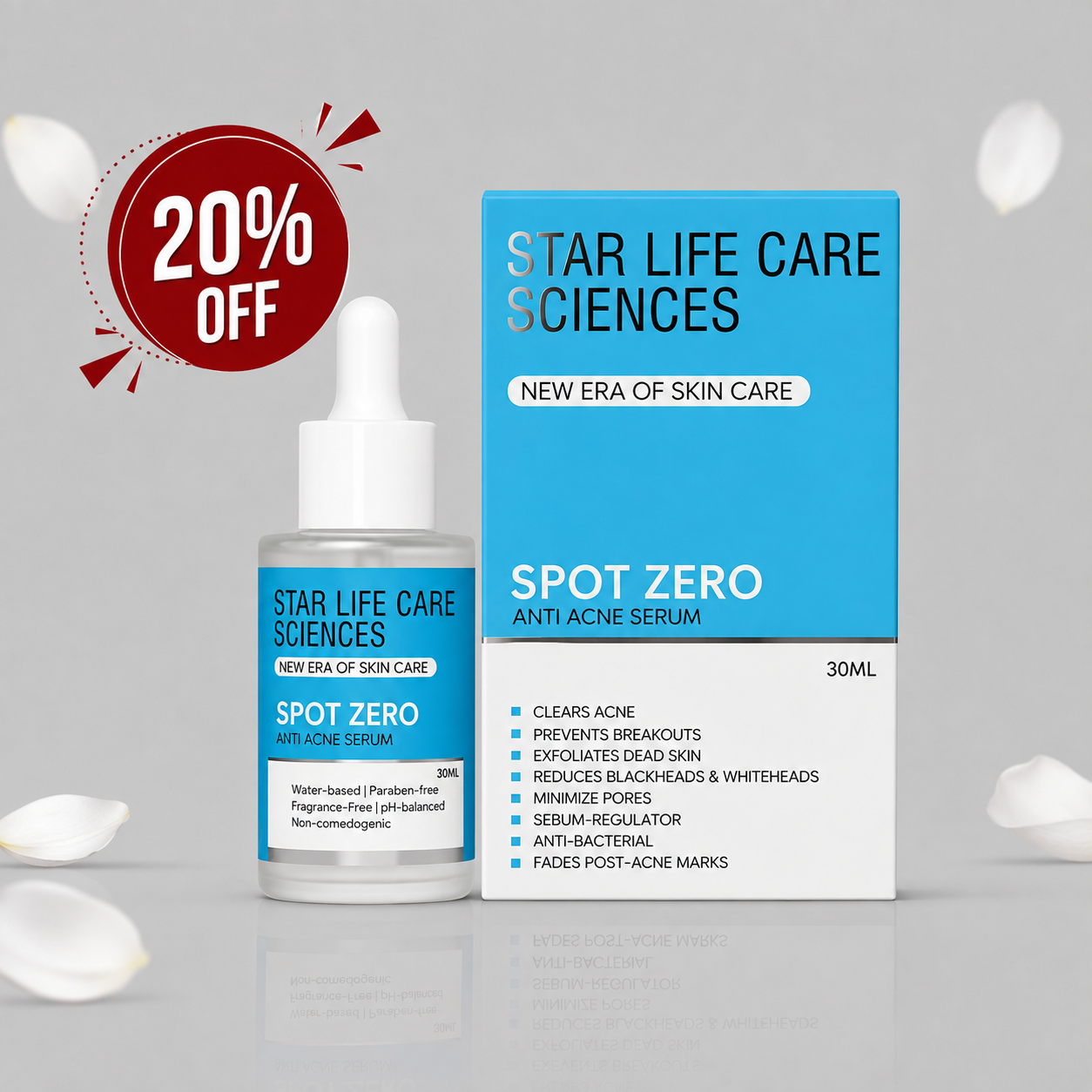
SPOT Zero Anti Acne Serum by Star Life Care Sciences
For those looking for a targeted niacinamide serum for acne, SPOT Zero Anti Acne Serum from Star Life Care Sciences contains a combination of ingredients selected for acne-related skincare concerns.
Its formula contains:
This combination is designed around concerns commonly associated with acne-prone skin, including excess oil, breakouts, clogged pores, blackheads, whiteheads, and the appearance of acne marks.
Because SPOT Zero contains multiple active ingredients, follow the product's usage instructions and introduce it gradually if your skin is new to active skincare.
Niacinamide Serum in Pakistan
If you're searching for niacinamide serum in Pakistan, price should not be the only factor you consider.
Before purchasing, look at:
This is especially important when comparing the best niacinamide serum in Pakistan, because different products may be formulated for completely different skin concerns.
If you are specifically dealing with acne, compare formulas based on the ingredients and purpose rather than choosing simply because a product has a high niacinamide percentage.
Niacinamide Serum Price in Pakistan
The niacinamide serum price in Pakistan can vary depending on the brand, formulation, concentration, size, and other ingredients included in the product.
Instead of comparing prices alone, consider what you are actually getting for the price.
A serum designed specifically for acne-prone skin may contain several complementary ingredients, while a basic niacinamide serum may contain fewer active ingredients.
The better choice depends on your skin concerns and skincare goals.
Best Niacinamide Serum for Acne in Pakistan
When looking for the best niacinamide serum for acne in Pakistan, start with your skin concerns.
If you have oily skin and frequent breakouts, you may benefit from a formula that combines niacinamide with ingredients specifically selected for acne-related concerns.
If your primary concern is uneven skin tone, a simpler niacinamide-focused formula may be enough.
The goal should not be to find the strongest serum. It should be to find a formula that fits your skin and that you can use consistently.
Common Mistakes When Using Niacinamide
Even a useful skincare ingredient can cause problems when your routine becomes unnecessarily complicated.
Using Too Many Active Ingredients
Combining several exfoliating acids, retinoids, scrubs, and acne treatments at once can increase the risk of irritation.
Keep your routine simple and introduce new products one at a time.
Expecting Immediate Results
Skincare requires consistency.
Don't assume that a serum has failed after only a few applications. Give your routine time while paying attention to how your skin responds.
Skipping Sunscreen
If you're concerned about acne marks or uneven skin tone, sunscreen is an important part of your daily routine.
Using Too Much Product
More product does not automatically mean better results.
Follow the recommended amount on the product packaging.
Frequently Asked Questions
Is niacinamide good for acne-prone skin?
Yes, niacinamide for acne-prone skin can be a useful ingredient in a skincare routine. It may help support the skin barrier and manage concerns such as excess oil and uneven-looking skin tone.
Can niacinamide help with acne?
Yes, can niacinamide help with acne is a question supported by research investigating topical niacinamide for acne. However, it should be considered part of a skincare routine rather than a guaranteed acne cure.
Can niacinamide reduce acne?
Can niacinamide reduce acne depends on the individual and the overall skincare routine. Niacinamide may support acne-prone skin, particularly where excess oil and inflammation are concerns, but persistent acne may require professional treatment.
Is niacinamide good for oily skin?
Yes. Niacinamide for oily skin is popular because research suggests topical niacinamide may help reduce certain measures of sebum production.
Can I use niacinamide with salicylic acid?
Yes. Niacinamide and salicylic acid can be used together, and both ingredients are commonly found in acne-focused skincare formulations. Introduce active ingredients gradually if your skin is sensitive.
Can niacinamide help with acne marks?
Niacinamide for acne marks can be useful in a routine designed to improve the appearance of uneven skin tone and pigmentation. Results vary, and persistent pigmentation may need professional assessment.
How often should I use niacinamide serum?
How often to use niacinamide serum depends on the specific product and your skin's tolerance. Follow the product directions and introduce it gradually if you are new to active skincare.
What should I look for in a niacinamide serum?
Look at the niacinamide concentration, complete ingredient list, formulation, texture, and suitability for your skin type. If acne is your main concern, consider a product designed specifically for acne-prone skin.
Final Thoughts
Niacinamide for acne-prone skin can be a valuable part of a simple and consistent skincare routine.
It may help address several concerns at once, including excess oil, skin barrier support, and the appearance of uneven skin tone and acne marks. But choosing the right formulation is just as important as choosing the ingredient itself.
If you're looking for a targeted niacinamide serum for acne, consider the complete formula, your skin type, and the concerns you want to address.
For persistent, painful, or severe acne, skincare products alone may not be enough. A dermatologist can help you identify the right treatment for your skin.
The goal isn't to use more products. It's to use the right ingredients, in the right routine, consistently.

