Cart
0
You may also like this


Acne doesn't always end when a breakout disappears. Many people are left dealing with acne marks, dark spots, redness and uneven skin tone long after the original pimple has healed.
This is where azelaic acid has become an interesting ingredient for acne-focused skincare.
So, how does azelaic acid help acne and acne marks?
Azelaic acid is a skincare ingredient commonly used in routines designed for acne-prone skin, blemishes and uneven-looking pigmentation. It can be particularly useful because it addresses more than one concern associated with breakouts.
In this guide, we'll explain the benefits of azelaic acid for skin, how it fits into an acne skincare routine, how it relates to acne marks and how it can work alongside ingredients such as niacinamide and salicylic acid.
Azelaic acid is a naturally occurring dicarboxylic acid used in skincare and dermatology.
It is commonly associated with skincare routines targeting:
Because it can address both blemish-related and pigmentation-related concerns, azelaic acid for acne marks is a popular search topic among people trying to improve the overall appearance of acne-prone skin.
One of the main reasons people use azelaic acid for acne is its multiple roles in acne-focused skincare.
It can help support clearer-looking skin by addressing factors associated with blemishes and inflammation.
However, it is important to be realistic.
Azelaic acid is not an instant cure for acne.
Its value comes from being part of a consistent, well-designed skincare routine.
One of the most useful aspects of azelaic acid for acne marks is that it can be incorporated into routines that address both breakouts and post-acne discoloration.
After acne heals, some people experience post-acne marks or areas of uneven pigmentation.
Azelaic acid can help support a more even-looking complexion and reduce the appearance of discoloration over time.
This makes it especially relevant for people dealing with:
Acne + acne marks + uneven skin tone
rather than only active breakouts.
Azelaic acid for hyperpigmentation is another important skincare application.
Dark spots can develop or become more noticeable following inflammation and sun exposure.
Azelaic acid is used in skincare formulations targeting the appearance of hyperpigmentation and dark spots, helping support a more uniform-looking complexion.
For people searching for azelaic acid for dark spots, consistency and sun protection are particularly important.
If your skin looks darker in some areas and more even in others, you may be dealing with uneven skin tone.
Acne-related discoloration can contribute to this appearance.
A routine containing azelaic acid can be part of a broader approach to improving the appearance of:
For persistent or significant pigmentation, professional dermatological advice may be appropriate.
People with oily skin often experience several concerns at the same time:
Excess oil → clogged pores → breakouts → post-acne marks
This is why azelaic acid for oily skin can be relevant as part of a complete routine.
However, azelaic acid shouldn't be viewed as a replacement for cleansing or other acne-focused ingredients.
A balanced routine can combine:
Cleanser → Acne treatment → Moisturizer → Sunscreen
Can you use azelaic acid and salicylic acid together?
They have different roles and can complement an acne-focused skincare routine.
Salicylic acid is a beta hydroxy acid (BHA) commonly used to support:
Azelaic acid is commonly used to support:
Together, these ingredients can target different aspects of acne-prone skin.
However, using several active ingredients at once can increase the chance of irritation. Introduce products gradually and pay attention to how your skin responds.
Azelaic acid and niacinamide can also complement each other in a skincare routine.
Niacinamide is commonly used for:
Azelaic acid can provide additional support for:
This makes azelaic acid and niacinamide an interesting combination for people whose concerns include both acne and post-acne discoloration.
Azelaic acid products can come in different concentrations.
The appropriate concentration depends on the product, formulation and individual skin tolerance.
A higher percentage isn't automatically better for everyone.
When choosing an azelaic acid product, consider:
Consistency and tolerability are more important than simply choosing the strongest product.
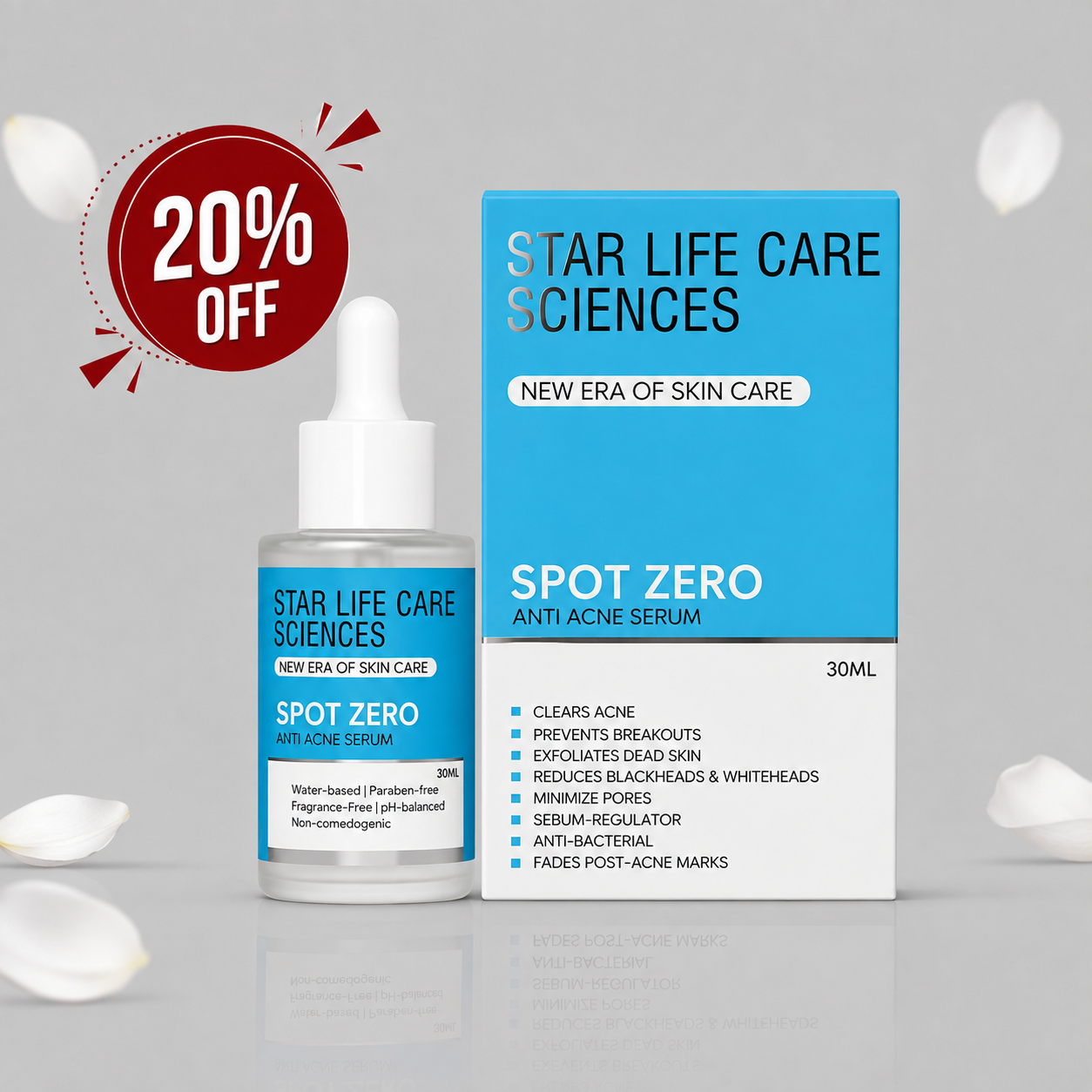
For people looking specifically for azelaic acid for acne, Star Life Care Sciences' SPOT ZERO Anti-Acne Serum contains Azelaic Acid 10%.
Its formula also includes:
This combination is designed around several concerns associated with acne-prone skin, including:
Breakouts + clogged pores + excess oil + blackheads + whiteheads + post-acne marks
The formula combines azelaic acid, salicylic acid and niacinamide, allowing different ingredients to address different aspects of an acne-focused routine.
The combination of ingredients gives SPOT ZERO a multi-target approach.
Supports blemish-prone skin and the appearance of post-acne discoloration.
Supports exfoliation and clearer-looking pores.
Supports the skin barrier and balanced-looking skin.
Helps address concerns associated with excess oil.
Help support skin comfort.
This makes SPOT ZERO particularly relevant for people searching for azelaic acid for acne-prone skin while also dealing with acne marks and excess oil.
Different ingredients target different concerns.
| Ingredient | Primary Focus |
|---|---|
| Azelaic Acid | Acne-prone skin + uneven-looking pigmentation |
| Salicylic Acid | Clogged pores + blackheads + excess oil |
| Niacinamide | Oil balance + skin barrier + uneven tone |
| Vitamin C | Antioxidant + brightening support |
| Tranexamic Acid | Appearance of hyperpigmentation |
| Alpha Arbutin | Appearance of dark spots |
| Glycolic Acid | Exfoliation + texture |
This is why choosing skincare based on your main concern is more useful than simply looking for the most popular ingredient.
A simple routine can help you introduce active ingredients without unnecessarily complicating your skincare.
Use a suitable face wash for acne-prone skin.
Use an appropriate treatment product according to its directions.
Apply a moisturizer suitable for your skin type.
Finish with broad-spectrum SPF 30 or higher sunscreen.
Remove dirt, oil and impurities with a suitable cleanser.
Apply your azelaic acid serum or treatment according to the product's instructions.
Finish with a suitable moisturizer.
If your product combines azelaic acid with salicylic acid and niacinamide, as SPOT ZERO does, avoid automatically adding multiple additional active treatments until you know how your skin tolerates the routine.
Yes, azelaic acid can be a useful ingredient for acne marks because it can support a more even-looking complexion and is commonly used in routines addressing pigmentation.
But results aren't usually immediate.
The appearance of post-acne marks can improve gradually, and the timeline varies according to:
If you're using azelaic acid for dark spots or acne marks, don't overlook sunscreen.
UV exposure can contribute to pigmentation and can make existing discoloration more noticeable.
Use a broad-spectrum SPF 30 or higher sunscreen during the day.
Think of your routine as:
Treatment + Hydration + Sun Protection
All three matter when you're working toward a more even-looking complexion.
Combining multiple acids and treatment products can increase irritation.
Introduce new actives gradually.
Even oily and acne-prone skin needs hydration.
Picking can worsen inflammation and contribute to lingering acne marks.
Skincare requires consistency.
Don't change products every few days because you haven't seen an immediate transformation.
If your concern is acne marks or hyperpigmentation, sunscreen should be an essential part of your routine.
Azelaic acid may be particularly relevant if your concerns include:
However, everyone has different skin.
If you have severe, painful, persistent or scarring acne, consult a dermatologist rather than relying solely on cosmetic skincare.
Azelaic acid for acne can be a useful part of an acne-focused skincare routine. It is commonly used for blemish-prone skin and can also address concerns related to uneven-looking pigmentation.
Yes, azelaic acid for acne marks can support a more even-looking complexion and is commonly included in routines targeting post-acne discoloration.
Azelaic acid for dark spots can be useful in a skincare routine targeting the appearance of hyperpigmentation and uneven skin tone.
Azelaic acid and niacinamide can complement each other in a skincare routine. Both ingredients are commonly used in products designed for acne-prone skin and uneven-looking skin tone.
Azelaic acid and salicylic acid have different roles and can be used together depending on the formulation and your skin's tolerance. If you're new to active ingredients, introduce them gradually.
Azelaic acid for oily skin can be useful as part of a broader routine, particularly when oiliness occurs alongside acne and uneven-looking pigmentation.
Results vary from person to person. The appearance of acne and pigmentation can take time to improve. Consistent use and sun protection are important.
SPOT ZERO Anti-Acne Serum contains Azelaic Acid 10%, along with Salicylic Acid 2%, Niacinamide 4% and Zinc PCA 1%, and is designed to target acne-related concerns including post-acne marks.
So, how does azelaic acid help acne and acne marks?
Azelaic acid is a versatile skincare ingredient that can fit into routines targeting acne-prone skin, blemishes, acne marks, dark spots and uneven-looking skin tone.
For active acne, it can be combined with ingredients such as salicylic acid, niacinamide and zinc PCA to address different aspects of blemish-prone skin.
For acne marks and pigmentation, azelaic acid can be part of a broader routine alongside ingredients such as niacinamide, vitamin C, tranexamic acid and licorice root extract.
For an acne-focused routine, SPOT ZERO Anti-Acne Serum combines Azelaic Acid 10% + Salicylic Acid 2% + Niacinamide 4% + Zinc PCA 1% in one targeted formula.
The most important principles remain simple:
Cleanse → Treat → Hydrate → Protect
Be consistent, avoid picking breakouts and protect your skin from UV exposure.
If your acne is severe, painful, persistent or causing scars, seek professional dermatological advice.

